

Five former chairs of a committee that advises the federal government on endangered wildlife have released an open letter expressing their worries about proposed alterations to the Species At Risk Act, which they argue could result in the “deliberate extinction” of endangered species within Canada.
Over 600 species are currently recognized under this legislation. The modifications being contemplated by the government would make the act — along with its protective measures — “insignificant,” according to a press release issued by the scientists last week.
The scientists, who are previous chairs of the Committee on the Status of Endangered Wildlife in Canada (COSEWIC), submitted the letter to the federal government last month. COSEWIC functions as an independent advisory group that evaluates species at risk of extinction and provides recommendations for their listing under endangered species law.
The decision to publicize the letter was made to ensure Canadians do not become “complicit in the deliberate extinction of Canadian Wildlife Species,” as stated in the press release.
This letter is being presented as the Carney administration contemplates extensive modifications to environmental regulations, including the Species At Risk Act, claiming these changes would expedite the approval and construction of significant projects.
The future of ‘jeopardy tests’
In May, two federal discussion papers suggested the approval of major projects prior to review and exempting specific projects from the “jeopardy test” mandated by law, if considered to be in the national interest.
“This is a blunt instrument against the law. It is unnecessary,” remarked David Green, a biologist and professor emeritus at McGill University, one of the former COSEWIC chairs supporting the letter.
Jeopardy tests prevent the government from permitting projects that could harm species listed under the act and their critical habitats if it would threaten their survival. According to Green, these tests are crucial for the protection of endangered species.
“[Jeopardy tests] serve as the final barrier. It’s the last line of defense for those that truly need safeguarding.”
The proposed amendments would also empower Carney and his cabinet to create “federal economic zones” where they could pre-approve industrial developments. Additionally, the cabinet would be granted the authority to authorize pipelines prior to a route being defined and exempt them from federal impact evaluations.
Currently, Bill C-5 allows for fast-tracking the approval process of projects deemed in the national interest, including environmental assessments.
-
After ‘feedback from thousands,’ Carney government slows down sweeping environmental changes
-
75 of these whales remain. A new West Coast pipeline would be ‘devastating’ for them, experts say
The letter refers to a new oil pipeline on the West Coast, which is currently under consideration as a project of national interest. This proposed pipeline would transport about one million barrels of crude oil daily over approximately 1,250 kilometers using a route similar to the existing Trans Mountain pipeline, as stated by the Alberta government.
This project could have harmful effects on various species protected under the act, including the southern resident killer whale — also known as orca. It would also negatively impact the Chinook salmon, which serves as the primary food source for the whale and is currently under consideration for listing, according to the scientists.
Both species and their essential habitats can be found in the Salish Sea, a collection of coastal waterways in southern British Columbia, where the proposed West Coast pipeline would terminate.
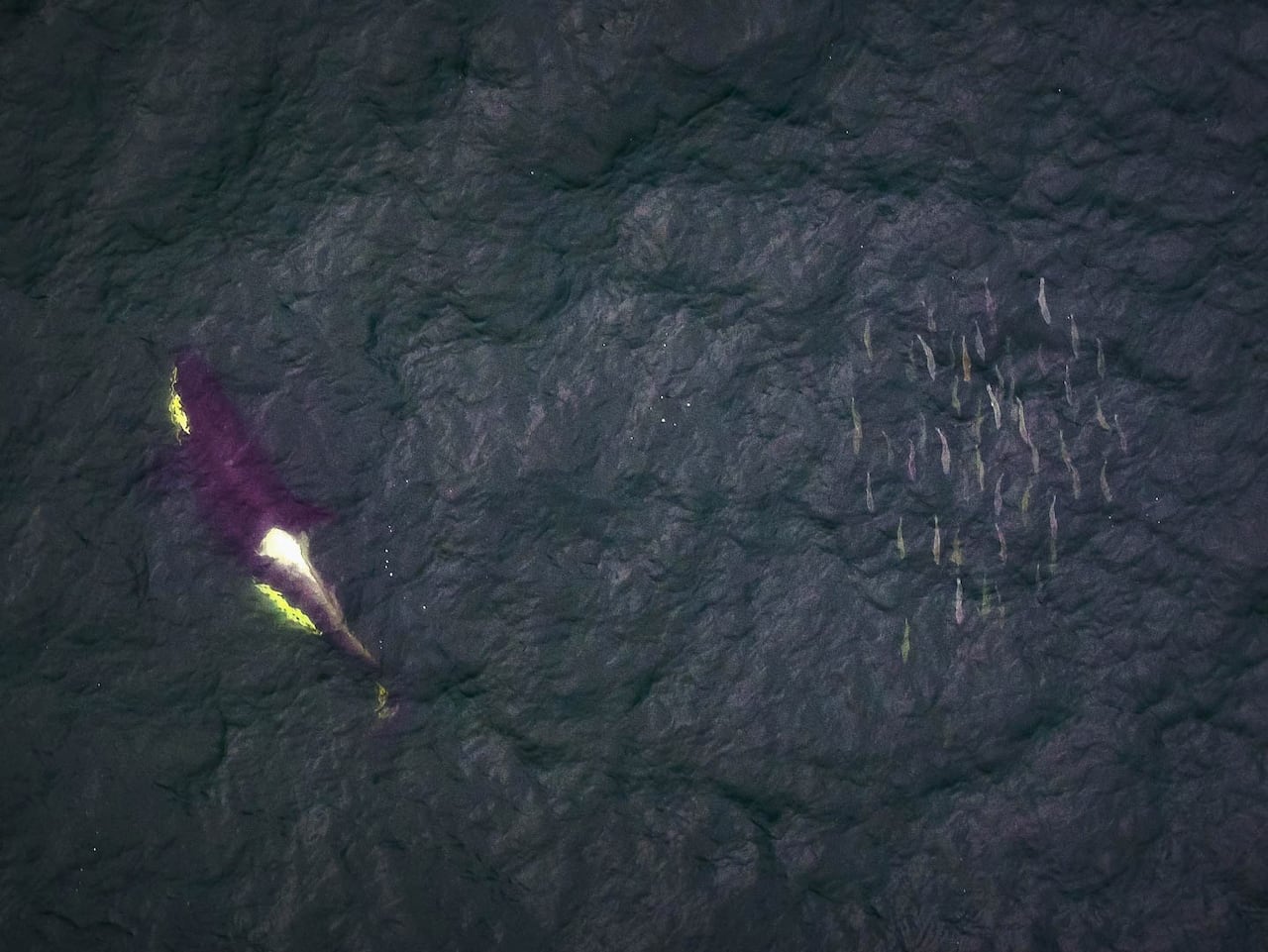
A southern resident killer whale swims past a school of salmon near the Fraser River, B.C. Chinook salmon are a main food source of the southern resident. (Keith Holmes/The Canadian Press/Hakai Institute)
“If considered to be in the national interest, the currently proposed West Coast pipeline could destroy the entire population of the endangered killer whales over time, both directly through increased noise from tanker traffic and indirectly through significant habitat destruction needed for the whales’ primary prey,” the scientists stated.
“Are Canadians willing to gamble this unique population of killer whales for another oil pipeline?”
There are 75 southern resident killer whales remaining globally.
An ‘extraordinary’ precedent
Green expressed his astonishment at the Liberal government’s proposal for these changes.
“It astonishes me because the Species At Risk Act was a significant achievement for a Liberal government 25 years ago… Now we have a Liberal government that seems intent on dismantling it.”
Kathryn Harrison, a UBC professor with expertise in climate and energy politics, asserts that through Bill C-5 and other proposed changes, the government is establishing an “extraordinary” precedent.
“It is quite remarkable to enact new legislation that not only permits the government to bypass the application of those laws but also grants the government a degree of power to introduce new laws,” she noted.
-
Trump expected to slash tariffs on Canadian goods, Carney asks premiers to put U.S. booze back on shelves
-
Trump pauses 50% tariffs on Canadian goods for 3 days
“Instead of amending those laws through Parliament, they’re opting to pass a new law stating, ‘we’re not concerned with that anymore.'”
As of the publication of this article, the scientists had not received a response from the government regarding their letter.
The Privy Council Office stated that the government is “dedicated to the conservation and recovery of species at risk and to fulfilling obligations under the Species at Risk Act,” in an email to CBC News.
The federal government has defended the potential changes by claiming that Canada must expedite projects that bolster the economy and lessen dependence on the U.S., amid the ongoing trade conflict between the two nations.
The Privy Council Office did not confirm whether the open letter was received but indicated that no decision has been made concerning modifications to the Species At Risk Act. The email also mentioned that a report summarizing feedback from all Canadians would be released before the summer concludes.
After receiving criticism from First Nations and environmental organizations, the government extended the public engagement period, which wrapped up last month.
Formal legislation is anticipated once Parliament reconvenes in September. Green urges the government to rethink its approach.
“If you allow species to vanish from Canada, they will not return,” he stated.