

On Friday, Kevin Warsh, the chair of the U.S. Federal Reserve, stated that inflation levels remain excessively high and hinted that the central bank might need to increase interest rates in the upcoming months to address this issue. This was a more definitive message regarding his economic perspective compared to previous statements.
During his first notable address at the Fed’s annual conference held in Jackson Hole, Wyoming, Warsh recognized that recent U.S. data indicates a slight easing of inflation; however, he remarked that “they do not suggest that underlying trends have substantially improved.”
“We need to be assured that underlying inflation is progressing towards our goal, clearly and at an adequate pace,” Warsh emphasized.
“If not, we have further work ahead.”
Warsh’s remarks, following his appointment in late May to replace Jerome Powell after his term concluded, were highly anticipated. With the Canadian economy facing difficulties, the U.S. also encounters significant challenges related to its debt and disruptions stemming from its tariff policies, which Warsh had to navigate in his address.
His comments seemed to provide reassurance to Wall Street that controlling inflation remains the central bank’s primary focus. Although Warsh did not indicate that a rate increase is imminent, he also appeared to dismiss any notions that inflation is no longer a concern.
He pointed out that inflation continues to be persistently above the Fed’s target of two percent.
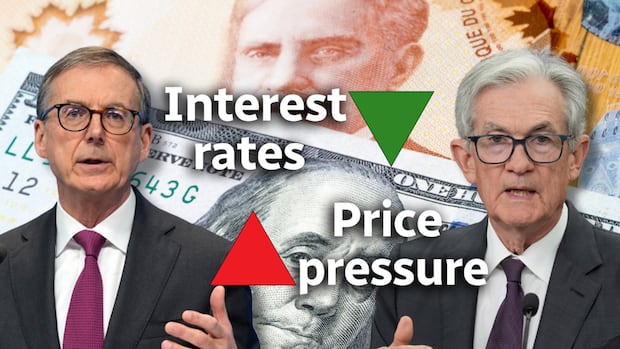
Central banks typically raise interest rates to control prices during inflationary periods, yet both the Bank of Canada and the U.S. Federal Reserve recently lowered rates. Additionally, Trump has recently ended Canada-U.S. trade discussions.
Following Warsh’s speech, the U.S. stock market remained stable; however, the bond market is anticipating a potential interest rate increase from the Fed. The yield on the two-year Treasury, which closely aligns with expectations for the Fed’s actions regarding the federal funds rate, increased from 4.22 percent to 4.30 percent, indicating that investors foresee a rise in short-term yields.
Yields on longer-term Treasuries, such as the 10-year and 30-year bonds, remained largely unchanged, suggesting that investors are not overly concerned about the need for elevated rates to combat inflation over an extended period.
No ‘forward guidance’ from Warsh
Jon Faust, an economist at Johns Hopkins University and former advisor to Powell, commented that Warsh effectively communicated a firmer stance on inflation while simultaneously avoiding the detailed forward guidance that his predecessors had provided and which he has criticized.
“He managed to express that he would support raising rates if necessary, which was a concern for many,” Faust noted.
However, Michael Strain, director of economic policy studies at the American Enterprise Institute, remarked that the Fed chair has previously expressed strong views on inflation without implementing a hike in the Fed’s key rate. He added that Friday’s comments do not clarify the timeline for any potential Fed actions.
This critical address comes amidst rising questions on Wall Street regarding Warsh’s dedication to combating inflation.
Such concerns may have led to increasing bond yields, which can raise borrowing costs for the government and other entities. Nevertheless, Warsh has stated he prefers not to provide what analysts refer to as “forward guidance” regarding whether the Fed will increase, decrease, or maintain rates in future meetings, as he believes it restricts the Fed’s flexibility.
Some economists contend he could elaborate more on his views regarding Fed policy without revealing future intentions.
U.S. inflation cooled in June
Warsh’s statements do not necessarily indicate that the central bank will raise rates in its next meeting scheduled for mid-September. However, his address suggested that current rates might not be sufficient to reduce inflation to the Fed’s two percent target.
Typically, interest rates need to be elevated enough to curtail borrowing and spending in order to mitigate inflation.
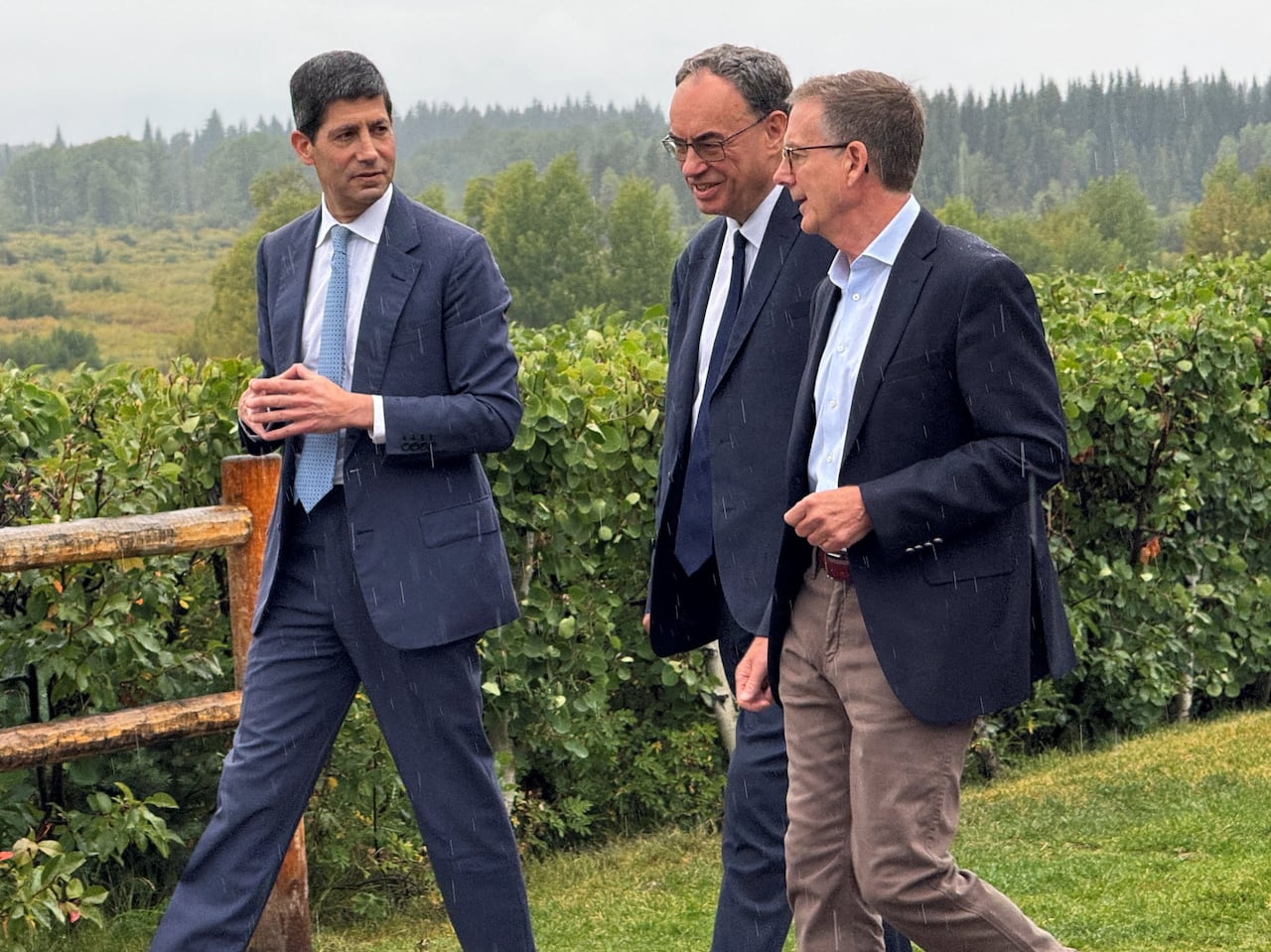
Warsh, left, is seen walking with Bank of Canada Governor Tiff Macklem, right, and Bank of England Governor Andrew Bailey at the Kansas City Fed’s annual economic symposium in Jackson Hole, Wyo., on August 28. (Ann Saphir/Reuters)
Warsh highlighted that over the past year, 54 percent of goods and services monitored by the government experienced price hikes of three percent or more. While this figure has decreased from its pandemic peak, it remains “well above” the 32 percent that saw similar increases in the two decades prior to the pandemic.
He also indicated that current interest rates do not seem to be limiting economic activity, citing strong business investments in AI infrastructure and consumer spending as evidence.
Although inflation decreased in June and July following a surge in May due to rising gas prices, it still exceeds the central bank’s target.
Traditionally, Fed chairs have used their speeches at Jackson Hole to address overarching issues related to interest-rate policy and the economy, or to hint at forthcoming changes in their strategies. In 2022, when inflation surged to 9.1 percent during the pandemic, Powell indicated that the Fed would persist in significantly raising interest rates to combat soaring prices and acknowledged that such actions would cause “pain” for consumers and businesses.
Currently, investors on Wall Street perceive the likelihood of a rate increase at the Fed’s next meeting on September 15 and 16 as nearly a 50/50 chance, according to futures pricing monitored by CME FedWatch, an increase from previous expectations that placed the odds of a hike at just one-third.