

Dominic LeBlanc, Canada-U.S. Trade Minister, engaged in what is thought to be his most extensive meeting yet with U.S. officials in Washington, as both nations strive to finalize an agreement that would provide tariff relief for Canadian industries severely impacted and reinstate U.S. alcohol sales in liquor stores operated by provinces.
LeBlanc, who has traveled between Ottawa and Washington several times recently to finalize the details of what could be a significant bilateral accord, remained tight-lipped with the press regarding the exact outcomes of his discussions with Jamieson Greer, President Donald Trump’s chief trade representative. However, he did mention that there have been some encouraging advancements.
“We are continuing the crucial work that Canadians expect from us. We had an extensive, thorough meeting with Ambassador Greer and his team,” LeBlanc stated to reporters after concluding the nearly three-hour discussion, which was initially projected to last about 30 minutes.
“Canadians expect us to negotiate a deal that serves the economic interests of Canada and its workers. We are very close, and progress is being made,” he added.
-
Premiers support Carney as trade conflict with U.S. intensifies
-
Trump likely to reduce tariffs on Canadian goods, Carney urges premiers to reinstate U.S. alcohol
Although specific details of the negotiations remain confidential, a source familiar with the anticipated agreement revealed that U.S. tariffs on Canadian steel and aluminum could be reduced from 50 percent to 25 percent, with ongoing discussions about derivatives and exceptions.
The revised tariff on steel will also introduce a quota system, limiting the volume of imports eligible for the lower rate, as per the source.
It is also anticipated that the agreement may lower Trump’s existing tariff on Canadian-manufactured automobiles and trucks from 25 percent to 15 percent. If this tariff applies solely to the non-U.S. components of a vehicle, which is the current assumption, the effective rate could decrease by as much as half (7.5 percent).
CBC News has chosen not to disclose the identities of the sources due to their lack of authorization to speak publicly on the matter.
In return for these tariff reductions, U.S. officials are reportedly seeking at least two concessions: the cessation of the ban on U.S. alcohol sales in many provincially-owned liquor stores and the removal of provincial barriers that restrict American companies from competing for government contracts in Canada.
These actions, initiated after Trump began a trade conflict last year with significant tariffs on Canadian industrial products, have effectively hindered U.S. liquor sales in Canada and obstructed numerous American firms from winning procurement opportunities.
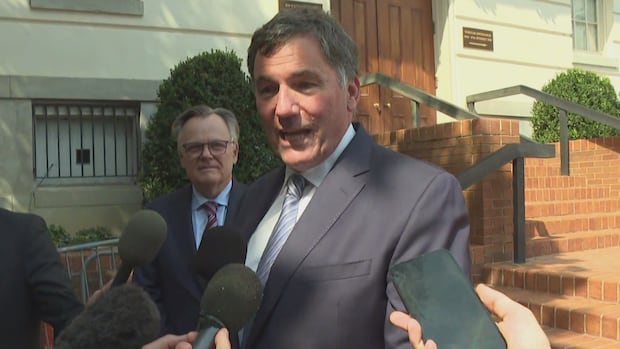
Canada-U.S. Trade Minister Dominic LeBlanc states that negotiators are nearing a tariff-relief agreement and will remain in Washington to ‘carry out the necessary work’ to reach a consensus.
While Carney’s initiative to negotiate with Trump to avert the anticipated 50 percent tariffs and reduce existing rates was well-received by some premiers, at least one expressed serious concerns regarding Ottawa’s plans.
Manitoba Premier Wab Kinew expressed distrust in Trump, believing Ottawa should adopt a more aggressive stance.
“You cannot secure a favorable deal with someone untrustworthy,” Kinew commented to reporters at the Manitoba Legislative Building in Winnipeg.
“I believe Donald Trump is weak. America is currently less influential globally than it was a year ago, and he is likely to face significant challenges in the midterms,” Kinew stated.
“Therefore, I think we should resist.”
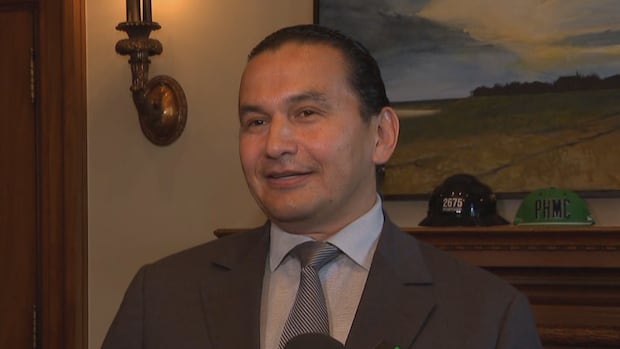
Manitoba Premier Wab Kinew believes U.S. President Donald Trump is ‘very weak’ and ‘about to face significant losses in the midterms’, asserting that Canada holds an advantageous position in trade talks.
Nonetheless, Kinew indicated that he is prepared to support Carney’s request for provinces to reinstate U.S. liquor sales, which is a vital component of the agreement that LeBlanc is negotiating with Greer.
Kinew described Carney as assertive during their Wednesday evening meeting with the premiers, emphasizing the necessity to restore alcohol imports.
“I wouldn’t say he was pleading, but what’s the step prior to pleading?” he remarked.
Despite his concerns, Kinew acknowledged the challenging position Carney is in: attempting to provide relief to sectors such as steel, aluminum, automotive, and lumber while negotiating with an often unpredictable American counterpart.
“He’s the one who reached out to Donald Trump. Someone needs to do it. Thank you, Mark Carney for taking on that role.”
Nova Scotia Premier Tim Houston, who stated he is “satisfied” with Carney’s presentation to the premiers thus far, contested Kinew’s assertion that Carney was nearly “pleading” with the premiers to lift the liquor ban, expressing surprise at Kinew’s interpretation.
“That’s far from accurate. I’m unsure what meeting he might be referencing — but it certainly wasn’t one I attended,” Houston commented in an interview with CBC’s Power & Politics.
“I wouldn’t characterize him as pleading; rather, I would say he is dedicated to securing the best possible agreement for our country and being transparent about some of the elements that may be involved,” he added.
Ontario Premier Doug Ford, who, like Kinew, has advocated for a more confrontational strategy, has not publicly commented on the potential trade agreement.
Meanwhile, Quebec Premier Christine Fréchette reported having a lengthy discussion with Carney on Thursday morning following the group call with premiers the previous evening.
Fréchette mentioned that she had “numerous inquiries” for Carney regarding the upcoming provisions and their potential impact on her province, which is a major global hub for aluminum production.
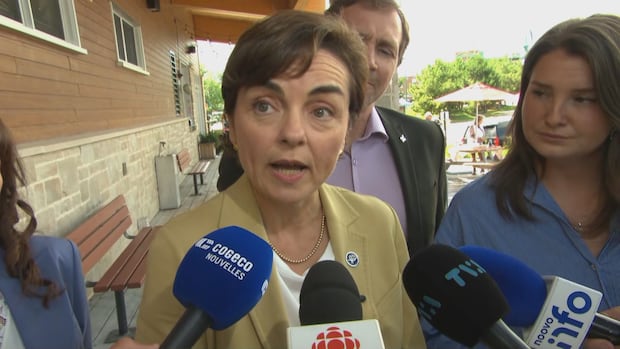
Quebec Premier Christine Fréchette shares that she had a ‘long conversation’ with Prime Minister Mark Carney on Thursday morning, during which he addressed many of her questions regarding aspects of a potential U.S. trade agreement. Fréchette mentions that her government will consider reinstating U.S. alcohol sales if the information is favorable.
“We are currently evaluating the responses he provided, as we need to understand the overall implications for Quebec’s economy, and we will determine our position afterward,” Fréchette informed reporters in Roberval, Quebec.
“It is possible that we will reinstate alcohol sales in SAQ, but we must first complete our analysis.”
B.C. Premier David Eby remarked that a negotiated agreement of this nature may not fulfill all aspirations, but he stands united with Team Canada and believes the federal government has made “significant strides across key sectors.”
“In light of these recent developments, we are optimistic about the possibility of reaching an agreement,” he stated in a written statement.
Similar to Carney, who assured premiers that his commitment to enhancing the Canadian economy and diversifying trading partners remains unchanged despite any U.S. agreement, Eby expressed that things “will not revert to the previous state” following this recent tariff conflict.
“We will continue to advance our efforts to discover new trade partners and secure major initiatives that will strengthen and create a more resilient economy that benefits all,” he concluded.