

On Saturday, the Yellowknives Dene First Nation along with the Tłı̨chǫ government revealed that they have come to an agreement regarding the suggested site for the Arctic Economic and Security Corridor.
This 400-kilometre all-season road is set to link the Grays Bay Road and Port in Nunavut with the highway network in the N.W.T. This initiative is part of a series of “nation-building projects” introduced earlier this year aimed at enhancing military presence and facilitating mineral exploration in Northern Canada. Additionally, it presents the possibility for spur roads that would connect Wekweètì and Gamètì to the all-season route.
The Yellowknives Dene First Nation and the Tłı̨chǫ government are spearheading this project in collaboration with both the territorial and federal governments.
“It is thrilling to demonstrate to Canada how Indigenous nations can lead and design significant projects,” remarked Tłı̨chǫ Grand Chief Jackson Lafferty in a statement.
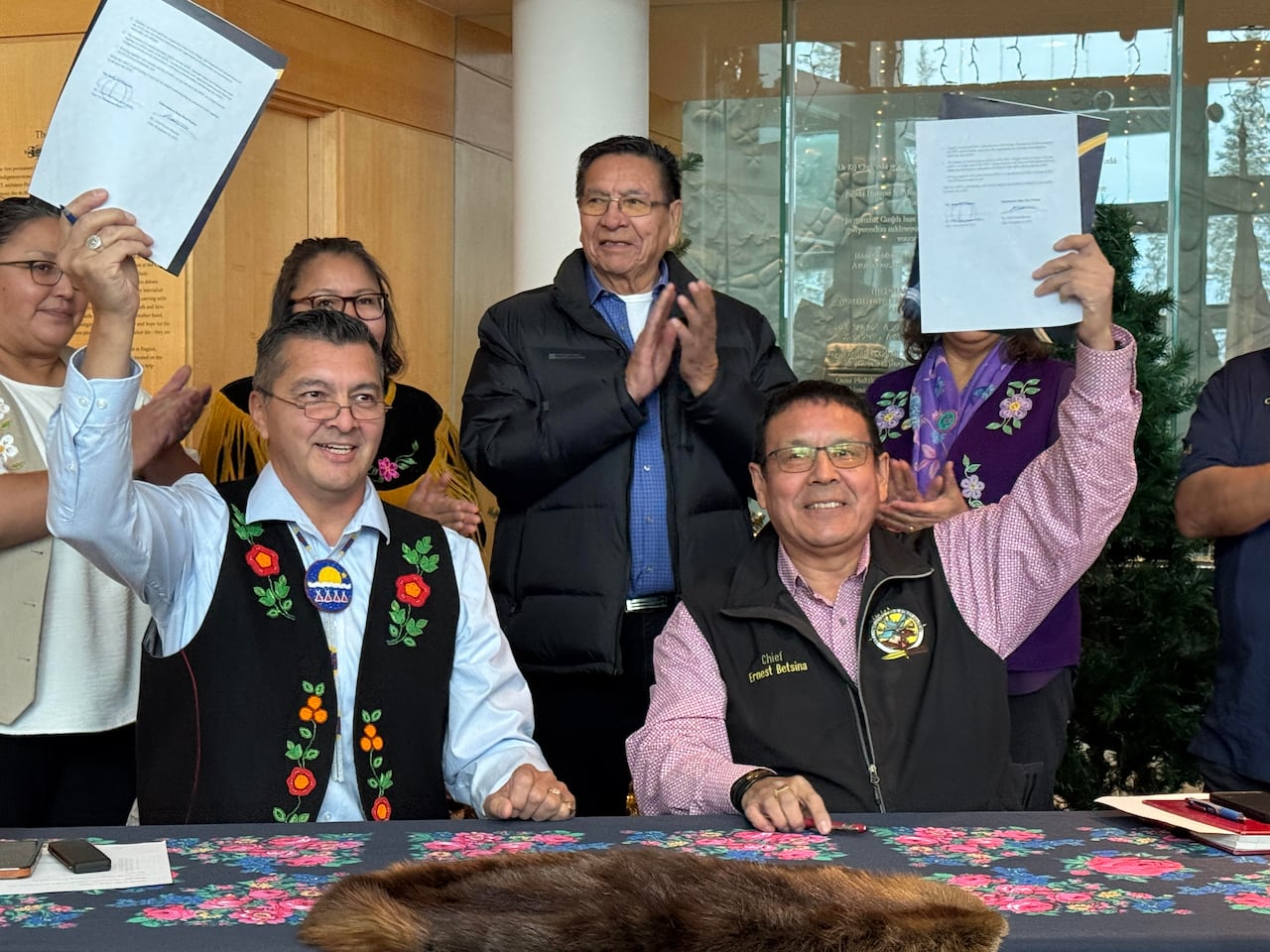
Tłı̨chǫ Grand Chief Jackson Lafferty and Yellowknives Dene First Nation Chief Ernest Betsina signed an MOU on Nov. 24, 2025, to jointly take the lead on the Arctic Economic and Security Corridor. (Tamara Merritt/CBC)
The proposed corridor will span approximately 30 kilometres in width and will traverse the Slave Geological Province. Leaders emphasized that this proposal is merely the initial phase of the process.
“This is a proposed corridor, not a definitive road, and that distinction is important,” stated Yellowknives Dene First Nation Chief Ernest Betsina and Chief Fred Sangris in a joint statement.
In addition to its potential for mineral exploration, the region also serves as a habitat and migration route for caribou. Both nations highlighted in their statement that the proposed corridor was designed to “minimize impacts” on the caribou population.
“We selected this corridor to mitigate the effects on caribou as much as possible, understanding that a road in the barrenlands will inevitably have impacts that we need to manage,” Lafferty stated.
The consensus was the result of over a year of collaborative efforts. In their announcement, the two nations mentioned that the agreement was informed by community-led research, traditional knowledge, and Western scientific methods. While they achieved a consensus, both nations recognized that the corridor was “perhaps not the route either would have taken independently.”
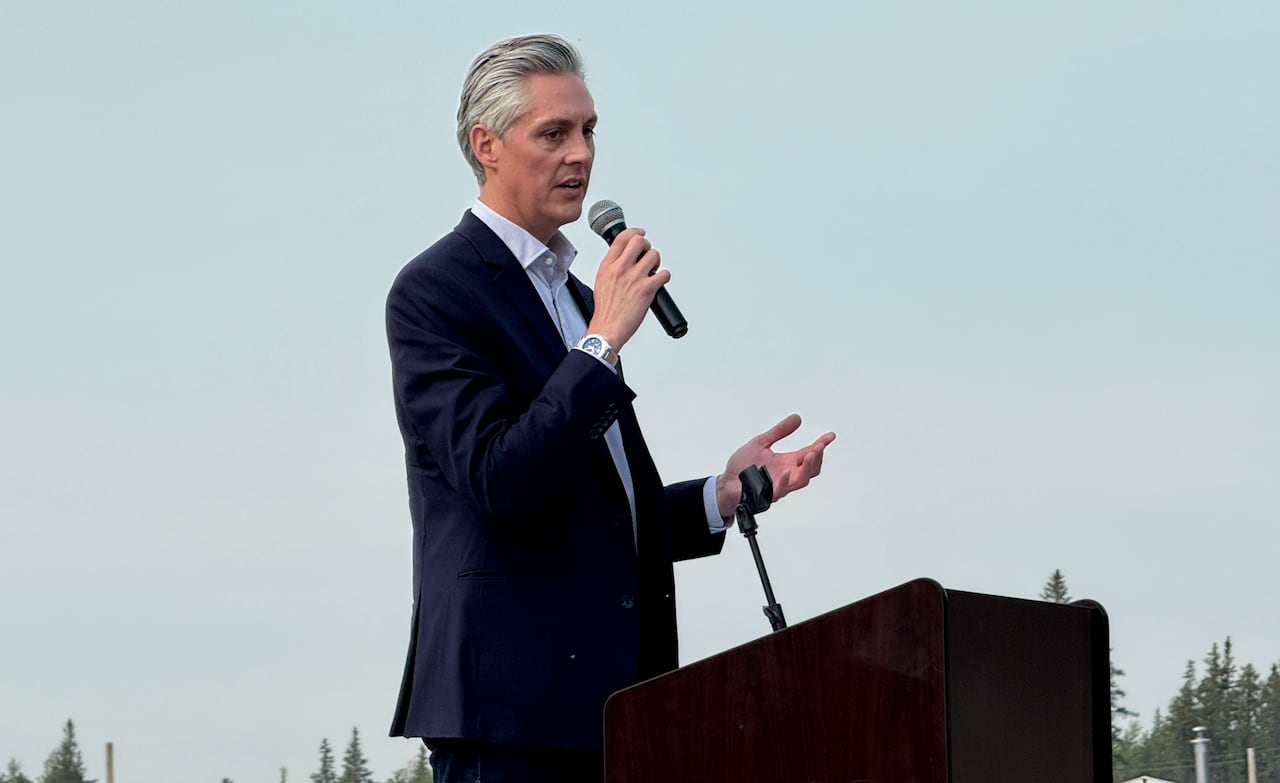
Premier R.J. Simpson stated that the government of the Northwest Territories “respects the consensus” reached by the two nations and is “committed to working alongside them.” (Carla Ulrich/CBC)
Premier R.J. Simpson expressed in a statement that the government of the Northwest Territories “respects the consensus” achieved by both nations and is “dedicated to collaborating with them.”
“This exemplifies what Indigenous-led development and government-to-government collaboration can look like,” Simpson remarked. “This significance extends beyond the project itself. The future of the Northwest Territories hinges on the ability of governments to work together differently to pursue major opportunities, with Indigenous governments taking the lead and partnering from the beginning.”
Upon completion, the corridor will mark Canada’s first land-based connection to the Arctic coast of Nunavut.
Moving forward, the Tłı̨chǫ government and Yellowknives Dene First Nation will create opportunities for their members, neighboring Indigenous governments, and community constituents to contribute their opinions on the proposed route.
“The feedback we receive in the coming weeks and months will be instrumental in shaping our future direction,” Sangris and Betsina noted in their statement.