

Following a heat wave that affected mainland Nova Scotia last week, Miriam Williams and her spouse have been using six box fans in their high-rise apartment, hoping to alleviate the oppressive feels-like temperature of 40 C.
“There is practically nothing we can do to change it,” she stated. “It has been intolerable.”
In July, Williams participated in a protest organized by tenant advocacy group ACORN at the Halifax Common splash pad during a national rally urging governmental intervention to address the increasing risks posed by extreme heat. While the specific needs vary regionally, the common focus is on establishing indoor temperature limits for rental properties and providing cooling subsidies.
Williams expressed concern that while healthy young individuals might cope with the heat, she worries about how those who are more vulnerable are managing.
“I really thought about all the children and elderly residents in our building who are facing similar struggles,” she remarked.
She fears that the government is not taking necessary measures while the extreme heat continues.
Christian Salmeron also joined the rally. He sought out an air-conditioned indoor location to work due to the heat, while other participants were in a similar predicament but lacked the option to work remotely, he noted.
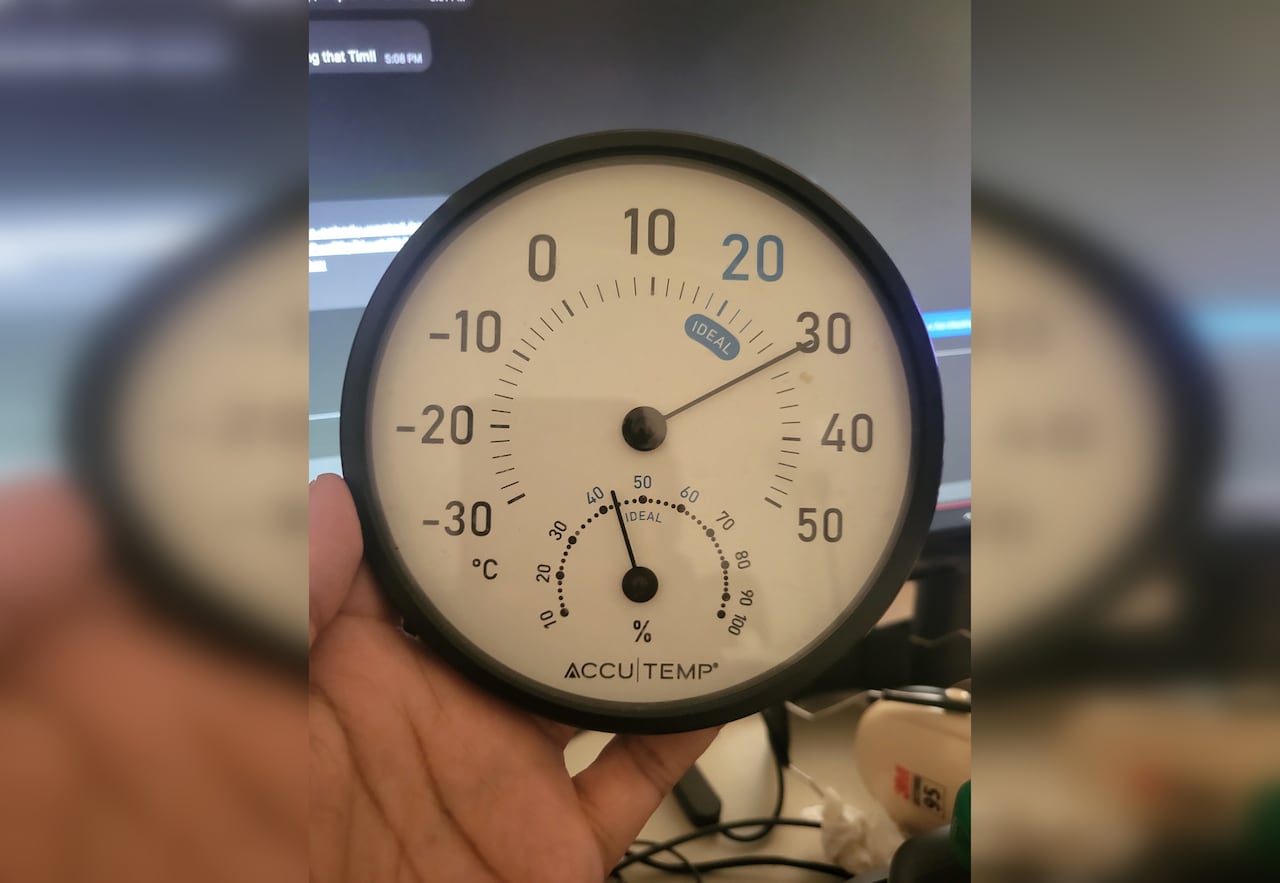
Salmeron mentioned that the temperature in his room ranged from 28 C to 30 C during the heat wave last week, making it difficult to work from home or even get a good night’s rest. (Submitted by Christian Salmeron)
Although the management of his building hasn’t explicitly prohibited window air conditioning units, he claimed that no tenants have installed them due to their high cost.
Williams can relate; she owns a portable air conditioner but seldom uses it.
“Running it for a single night is just too expensive,” Williams explained. “The electricity bill is what truly hurts.”
The demonstrators are advocating for a provincewide limit on indoor temperatures and are calling on the government to prevent landlords from prohibiting certain air conditioning units while also providing financial support for their purchase.
“This is the kind of action we want to see so that people can at least avoid suffering from such extreme heat,” he said.
There is currently no consistent method for reporting heat-related fatalities in Canada, but a coroner’s report from British Columbia indicated that the 2021 heat wave resulted in 619 deaths in the province.
In June, New Westminster in B.C. became the first city council in the nation to pass a bylaw amendment mandating that all rental units must maintain an average safe indoor temperature of 26 C between the hours of 8 p.m. and 8 a.m. in at least one living space, excluding bathrooms.
The provincial government stated in an email to CBC News that it is the responsibility of the building owner to set rules regarding additional air conditioning units.
The email highlighted that Service Nova Scotia requires landlords to maintain rentals that are safe and suitable for living. Tenants who cannot resolve issues may escalate their concerns through the residential tenancies program.
Sarah Brannen, a representative for the Halifax Regional Municipality, mentioned in an email that the city’s climate action plan, HalifACT, aims to prepare communities for extreme heat occurrences.
“Municipal staff are exploring potential strategies to enhance understanding and address indoor heat risks, including safe indoor temperature considerations,” she stated.
MORE TOP STORIES
-
Adsum House ‘sickened’ by past misogynistic song made by N.S. cabinet minister
-
At Canada’s largest keel-boat regatta, advocates hope to see more women ride the wind
-
Current, former N.S. Black politicians applaud incorporation of national congress
-
Halifax likely ‘several years’ from housing affordability improving: staff
-
Day parole extended for Hells Angels hitman