

A groundbreaking skin cancer therapy that merges immunotherapy with mRNA vaccine technology has shown encouraging outcomes in a late-stage clinical trial, as announced by pharmaceutical firms Merck and Moderna in a statement on Wednesday.
The new treatment outperformed immunotherapy alone in decreasing the chances of melanoma recurrence and in preventing the cancer from spreading to other areas in patients who had previously undergone melanoma surgery, according to the statement.
The release regarding the treatment, named intismeran, indicated that the findings demonstrated “statistically significant and clinically meaningful improvements.”
Medical professionals expressed cautious optimism about the news: the Phase 3 trial — the final stage before applying for regulatory approval — has not yet been completed, and the results shared on Wednesday are based on an interim analysis.
The companies stated that they will eventually present the data at an oncology conference and provide it to regulatory bodies.
‘It’s still early’
While waiting for comprehensive details, Dr. Marcus Butler, a medical oncologist and melanoma disease site lead at Toronto’s Princess Margaret Cancer Centre, described the announcement as a thrilling advancement in the field.
Butler noted that a previous Phase 2 trial of the treatment had indicated promising results with a much smaller participant group. This suggests that favorable results in a broader Phase 3 trial could be a reason for optimism.
“We are truly hopeful that the level of benefit will be significant, but it’s still early,” Butler remarked.
If the complete trial data eventually validate the findings, Dr. Ramy Saleh, an associate professor of oncology at McGill University in Montreal, estimated that the wait for the treatment to become accessible to Canadians could exceed eight months.
-
Does it seem easier to book a dermatologist for Botox than a mole check? You’re not alone
-
U.S. FDA approves first mRNA flu shot from Moderna
“The main challenge here is how to transition from a small clinical study involving a few patients to a global rollout,” Saleh stated.
He emphasized the need for cooperation among government, healthcare officials, and industry to address logistical and operational challenges in implementing this new treatment on a large scale.
“The pressing question is, what will the cost be?” he added.
Another important consideration is whether taxpayers and government entities will be willing to support it.
As reported by the Canadian Cancer Society, approximately 11,300 individuals in Canada are expected to be diagnosed with melanoma this year, with an estimated 1,250 fatalities resulting from the disease. Melanoma Canada states that melanoma is among the most prevalent cancers in Canadians aged 15 to 29 and 30 to 49.
“We are still losing three individuals daily in Canada to melanoma,” said Falyn Katz, CEO of Melanoma Canada. “If this treatment can make a difference, it would be a significant success.”
Butler pointed out that public companies frequently announce preliminary findings to comply with market disclosure regulations and avoid insider trading, rather than waiting for the complete study results. On Wednesday, shares of Moderna surged nearly 177 percent, while Merck’s shares rose by 12.6 percent.
‘Recognize and attack’
This innovative treatment integrates Merck’s immunotherapy agent pembrolizumab, marketed as Keytruda, with a customized mRNA vaccine from Moderna that is designed based on an analysis of mutations found in the patients’ tumors.
The immunotherapy effectively activates the immune system by removing its “checkpoints,” as explained by Butler. Meanwhile, mRNA vaccines provide instructions to cells, enabling the immune system to combat pathogens or foreign substances, including cancer cells.
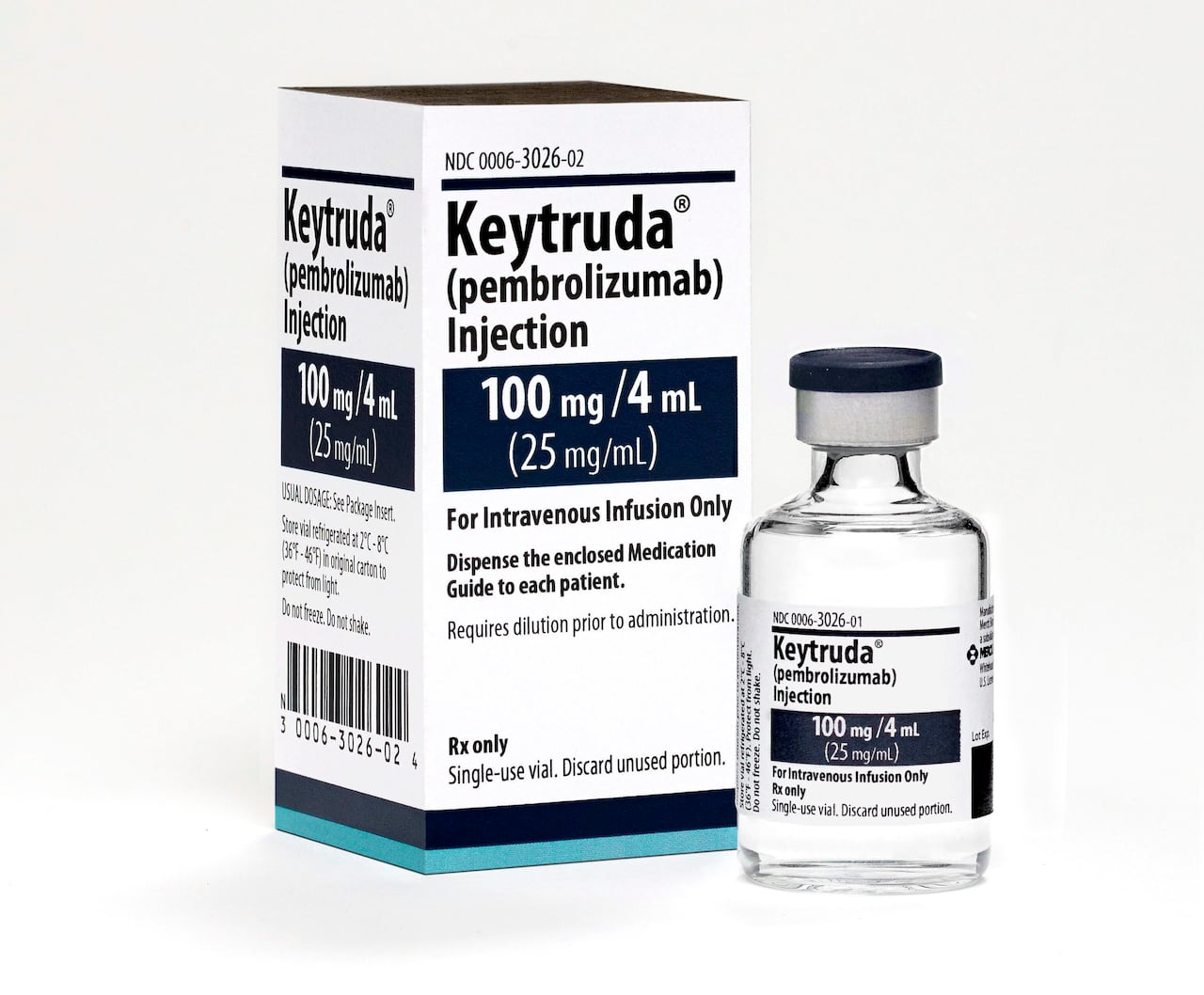
Merck’s immunotherapy drug pembrolizumab, sold as Keytruda, effectively removes constraints on the immune system. (Michael Lund/Merck/The Associated Press)
In remarks shared with Science Media Centre UK, Dr. Lennard Lee, a consultant medical oncologist and associate professor at Oxford, stated that this therapy utilizes tumor samples to identify abnormal proteins in cancer cells, known as neoantigens. A personalized mRNA vaccine derived from a patient’s tumor samples can then instruct their immune system “to identify and attack cancer cells” that possess those antigens.
“To simplify, one treatment helps the immune system recognize targets, while the other facilitates the immune response,” Lee explained.
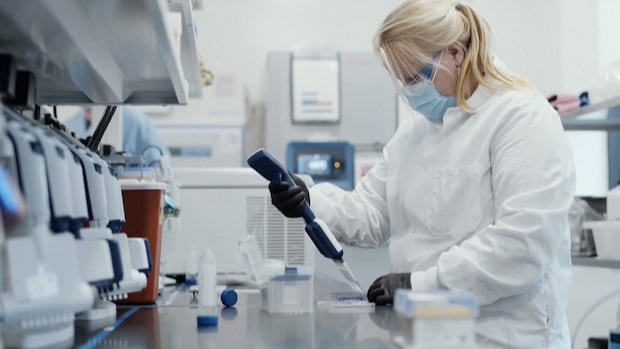
Health Canada has approved a Phase 1 clinical trial for Moderna’s potential mRNA vaccine for the Bundibugyo strain of Ebola. If found safe and effective, the vaccine would be used in future outbreaks of the virus.
Caveats and limitations
The trial involved 1,137 high-risk patients diagnosed with Stage IIB-IV melanoma that had been surgically removed. Canadian participants were included in the trial, with several from Princess Margaret, Butler indicated.
Participants were randomly assigned to receive either up to nine doses of Keytruda along with the tailored vaccine or Keytruda alone over approximately one year. The companies reported that no new safety issues have arisen during the trial.
However, Butler raised a concern about the study, noting that mRNA vaccines can generally stimulate the immune system, even without specific targeting for melanoma neoantigens. For instance, COVID-19 mRNA vaccines have been associated with improved cancer survival rates when administered alongside immunotherapy.
Since patients who received a placebo did not get a “dummy vaccine,” Butler explained that the study might not effectively separate positive results from general mRNA immune stimulation and outcomes resulting from the specific mRNA melanoma vaccine.
Butler also warned that this trial was limited to early-stage melanoma patients whose tumors were completely removed surgically. He mentioned that other clinical trials are ongoing for patients with advanced melanoma, and some past studies have produced unfavorable outcomes.
“Thus, just because this method may be effective in early stages does not guarantee its efficacy in later stages,” he stated. “Time will provide clarity, and further studies are necessary.”