

A startup from Nova Scotia is experimenting with a technique aimed at capturing and storing additional carbon in the ocean, utilizing a new pilot facility to validate its concept.
The ocean serves as a significant repository for surplus carbon dioxide, having absorbed approximately 30 percent of all anthropogenic carbon emissions since the 1980s.
The firm pHathom is working to extract even more emissions from the atmosphere by capturing carbon dioxide and transforming it into a stable form that can be securely stored in ocean waters for thousands of years.
The evaluation of this method will take place at the Huntsman Marine Science Centre, a non-profit research and education facility located in St. Andrews, N.B.
According to co-founder and CEO Kimberly Gilbert, this pilot project is the initial phase in demonstrating that the method is both safe and effective.
“Climate change is a worldwide challenge, [but] introducing something into a local ocean presents a localized issue … therefore, a local solution must be demonstrated and validated as safe,” Gilbert stated.
The technique employed by the company is based on a natural phenomenon. Rainfall captures carbon dioxide from the atmosphere, causing it to become slightly acidic.
When these raindrops land on alkaline materials such as limestone, a small portion of that rock dissolves, which decreases the acidity of the water and converts the carbon dioxide into bicarbonate.
Ultimately, these raindrops find their way to the ocean, where bicarbonate can be held for tens of thousands of years, thus preventing carbon dioxide from entering the atmosphere.
“We replicate that process, but in a reactor,” explained Gilbert.
The approach involves taking seawater and exposing it to emissions from a biomass power facility, increasing the water’s acidity. This acidic mixture is then combined in a tank with small limestone particles, transforming the carbon dioxide into bicarbonate, and subsequently returned to the ocean with a pH similar to that of regular seawater.
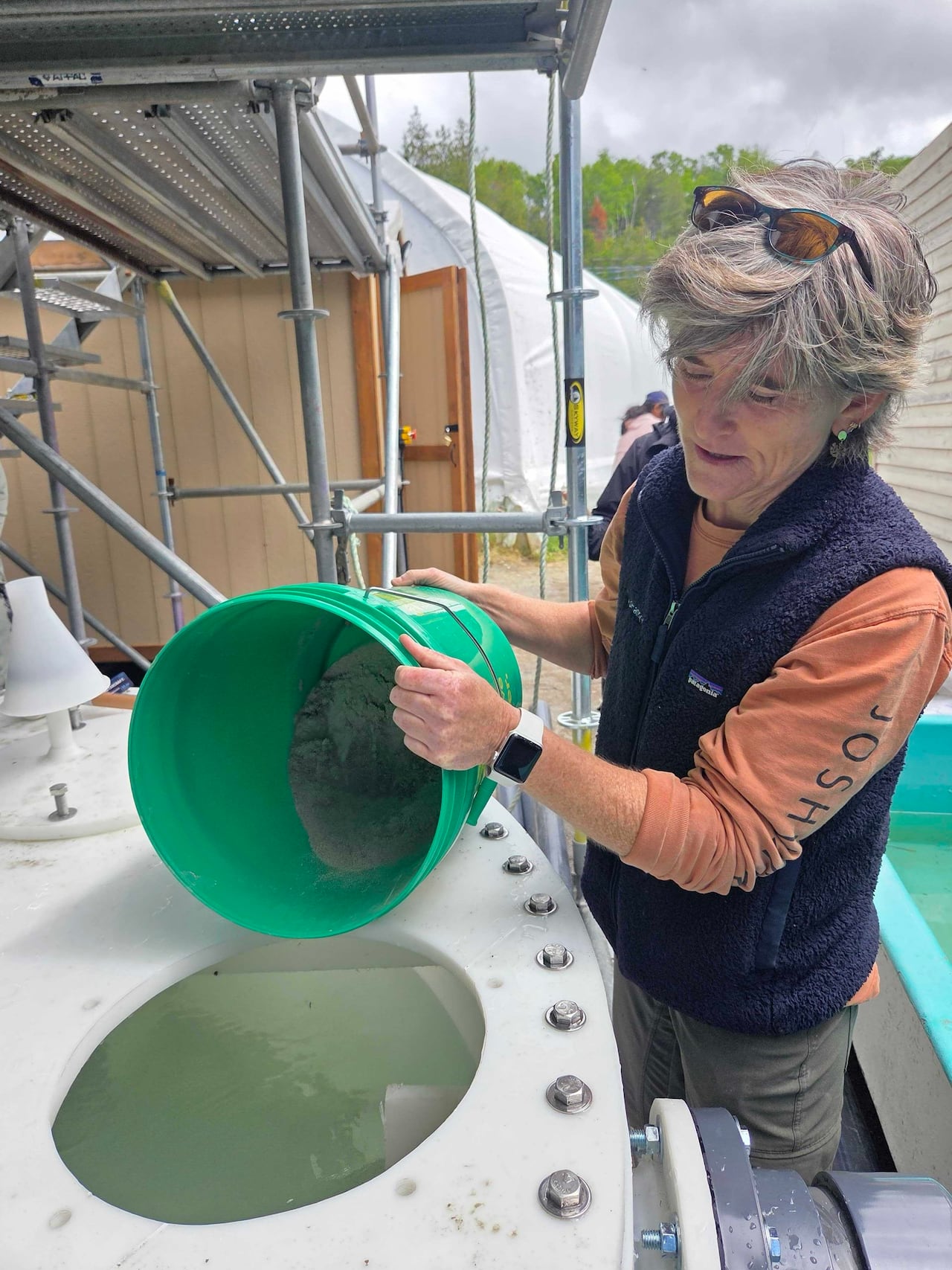
Kimberly Gilbert is the CEO of pHathom. She stated that the company’s philosophy is to first avoid causing harm and then strive to create positive impacts. (CBC)
Other enterprises in Nova Scotia are exploring various adaptations of this carbon removal strategy, referred to as alkalinity enhancement.
For instance, Planetary is conducting a project at Tufts Cove in Halifax, where alkaline rock is added to seawater to raise its pH and enhance its ability to absorb carbon dioxide. Another firm, CarbonRun, is implementing a similar method in rivers across Nova Scotia.
Gilbert noted that the advantage of pHathom’s technique lies in its utilization of highly concentrated carbon dioxide, which enhances process efficiency. Since the reaction occurs within a controlled reactor, the environmental effects can be precisely measured.
During the pilot stage, the goal is to capture 0.1 tonnes of carbon dioxide daily. For context, the Belledune coal-fired power plant in northern New Brunswick emits about one million tonnes annually. The method generates treated water for experimental tanks, where scientists will monitor the impact on various marine species over a three-month duration.
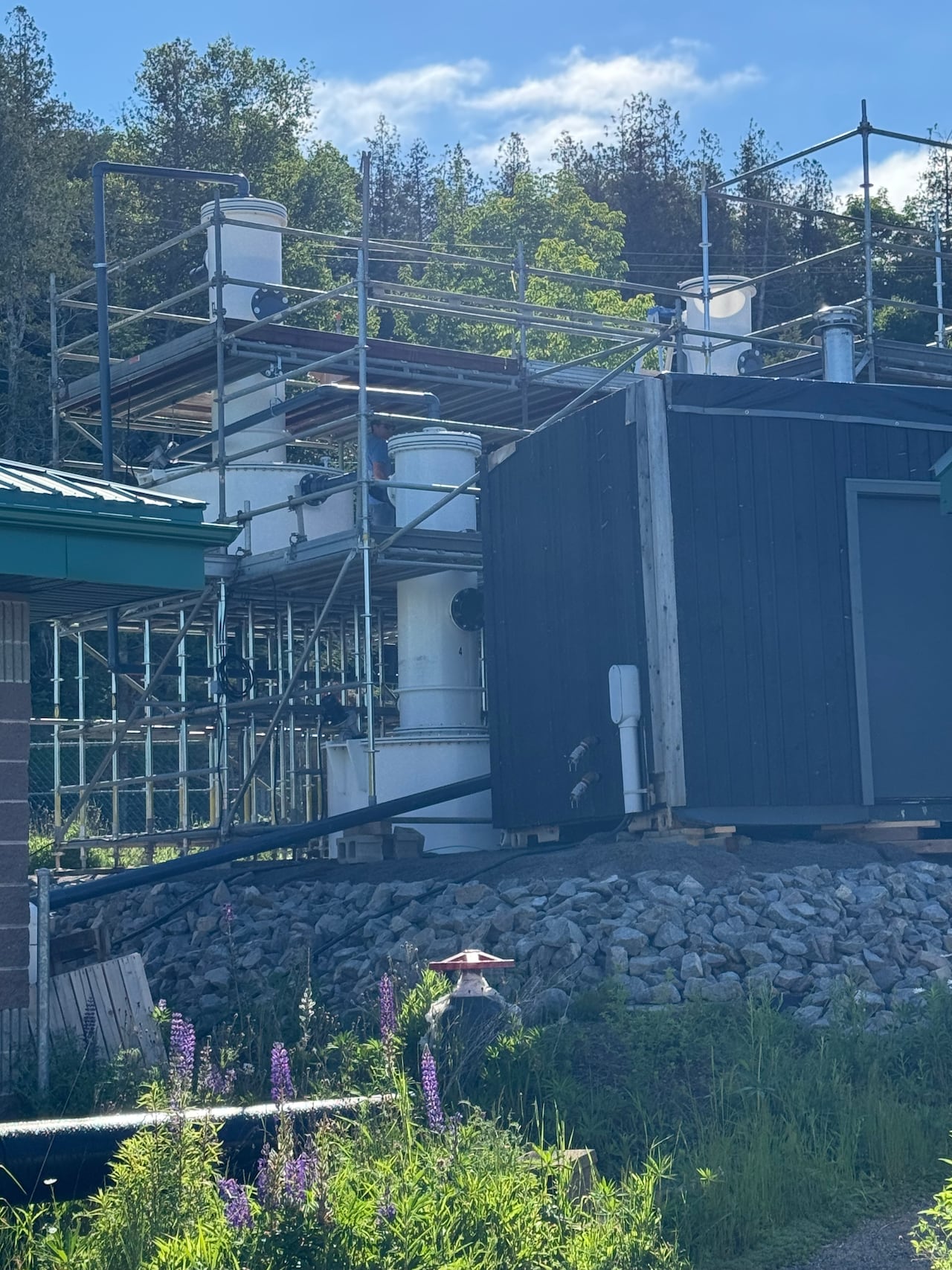
Experiments will be conducted at the Huntsman Marine Science Centre. (CBC)
Davide Asnicar, an associate research scientist at the Huntsman Marine Science Centre, remarked that due to the novelty of pHathom’s process, numerous questions remain unanswered.
“It’s quite exciting to be at the forefront of this scientific field as it presents many opportunities to determine the safety limits,” he remarked.
If the pilot is successful, pHathom intends to expand with a second testing site in Nova Scotia next year, integrating their reactor into a facility that is transitioning from fossil fuel heating to biomass energy.
For any carbon removal technology, scaling up remains a critical challenge. The Intergovernmental Panel on Climate Change (IPCC) modeling suggests that to confine global warming to 1.5 degrees Celsius, carbon dioxide removal on a global scale must reach between 10 and 20 gigatonnes annually (one gigatonne equates to one billion tonnes).
Katja Fennel, an oceanography professor at Dalhousie University and lead investigator of the Ocean Alk-Align research consortium, cautioned that significant geochemical and regulatory obstacles are present.
“For [ocean alkalinity enhancement] to be regarded as a viable climate mitigation technology, we need to establish confidence that it can be scaled to one gigatonne of [carbon dioxide] removal each year,” Fennel stated. “It’s a formidable challenge, and it’s unclear whether this can be achieved.”
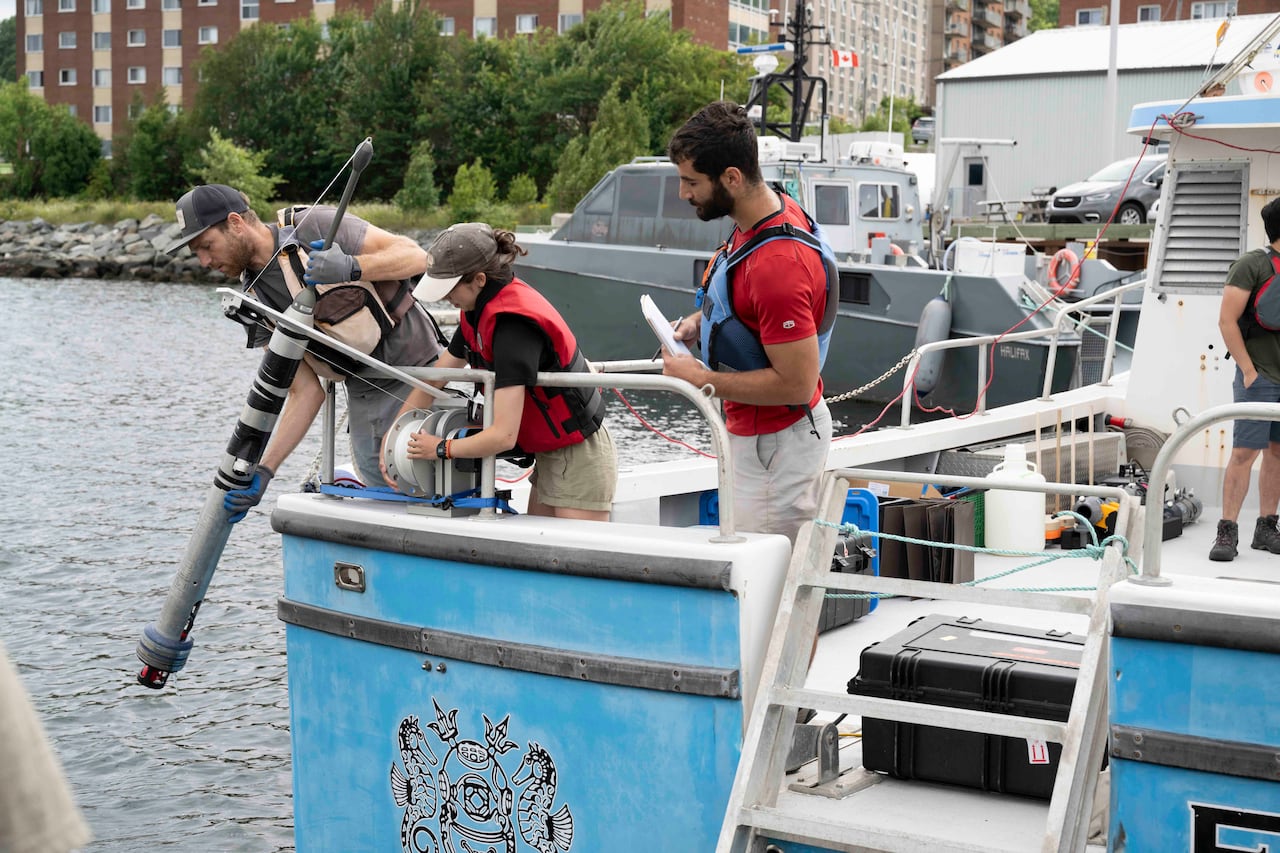
Researchers are placing tracking devices in Halifax harbour to observe water movement. (Dalhousie University)
Energy consumption stands as another significant challenge, as these extraction and processing techniques demand substantial power to function.
Nonetheless, Fennel contends that the urgency of the climate crisis necessitates the exploration of all potential removal technologies—assuming that efforts to transition away from fossil fuels persist.
“We must reduce emissions, that is indisputable.”
A recent report from the Canadian Senate emphasized Canada’s position as a global frontrunner in ocean alkalinity enhancement research, calling on the federal government to lead the way in international implementation and regulation.
However, domestic climate strategies are encountering economic challenges. Recent changes to the federal industrial carbon pricing have generated uncertainty in the market, jeopardizing the financial feasibility of several Canadian carbon capture and storage initiatives.
In spite of these policy changes, Gilbert remains hopeful that economic and environmental realities will ultimately compel global action. When that moment arrives, she wants the technology to be ready and validated.
“When we begin to focus on this issue again and are prepared to take action, we will be prepared.”
MORE TOP STORIES
-
Exclusive
N.S. families thought they buried their loved ones. Officials are now investigating
-
Legal aid lawyer calls for changes to N.S. government public safety omnibus bill
-
RCMP say Timberlea arsons believed to be targeted
-
Windsor hobby farmer beefing up security after chickens stolen
-
Video
Premier touts N.S. projects at investment summit