

When Sam Joseph Karam got an email from the online marketplace Etsy informing him that 11 of his T-shirt designs featuring the slang “bruh” had been removed due to a trademark infringement, he felt an immediate sense of doubt.
“Typically, it’s just one or two listings that are flagged. Seeing 11 all at once raised a red flag for us,” Karam noted.
Karam, the owner of the U.S.-based apparel business Customized Designs, which sells clothing on platforms like Etsy, mentioned that the company also took away his Star Seller badge — a distinction awarded by Etsy for exceptional customer service. He subsequently observed a noticeable decline in sales.
The email from Etsy revealed that the designs were reported by Malik Yawar Abbas, who possesses a Canadian trademark for the term “bruh.”
Karam is among several Etsy sellers who informed CBC News that their products were removed after the trademark holder lodged complaints. CBC News examined various emails from Etsy to Karam and two other sellers, confirming that the removals were instigated by Abbas’s complaints.
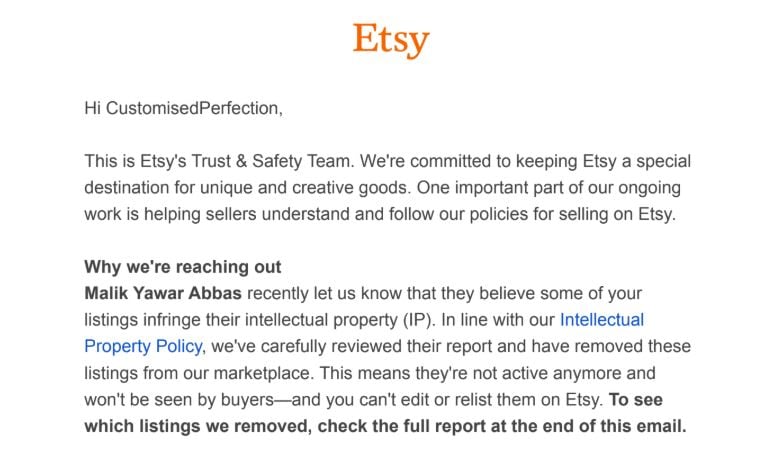
A screenshot of part of an email Etsy sent to Karam, detailing the takedown of some of his designs following a report by Malik Yawar Abbas, who holds a trademark on the term ‘bruh.’ (CBC)
Karam asserts that Abbas, the trademark holder, is effectively “squatting” on the trademark, seeking to profit by licensing the term to others instead of creating his own products. Legal experts suggest that platforms and the legal system need to take more steps to prevent trademarks from being exploited in this manner.
No clothes for sale, request for payment
A trademark for the term “bruh” was issued by the Canadian Intellectual Property Office (CIPO) in July 2025 for various types of clothing, according to the government’s trademark database. Additionally, another trademark for the same term was recently granted to Abbas for advertising restaurant services.
CIPO did not respond to specific inquiries about the “bruh” trademark in an email to CBC News but stated that each trademark application is “examined on a case-by-case basis.”
After the removal of his listings, Karam discovered the trademark holder’s website and was surprised to see a section explaining how he safeguards the “bruh” trademark, encouraging others to license it for permission to use the term.
“We didn’t create the word. The streets did. The internet did. But we recognized its potential,” reads a statement on the site.
The website does not sell any clothing; it only showcases designs and products, such as energy drinks, featuring the word “bruh.”
In an email to CBC News, Abbas indicated that those images are intended to demonstrate “potential commercial applications” of the brand.
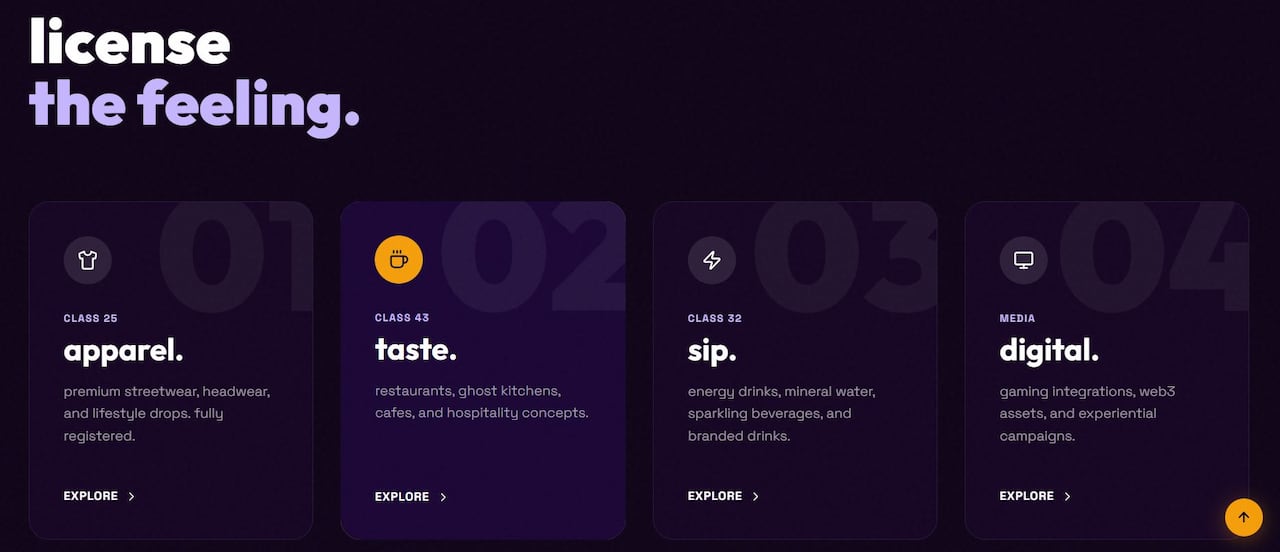
A screenshot of the website promoting the ‘bruh’ trademark. The site prominently displays options to license the usage of the term. (CBC)
When Karam reached out to Abbas regarding the Etsy takedowns to see if he would retract his complaint, Abbas stated he would do so if Karam accepted several conditions and paid him $1,000.
Karam declined, asserting that the circumstances indicate what he describes as “trademark squatting.”
“It’s quite discouraging,” Karam expressed. “When someone immediately demands $1,000 just to withdraw their complaint, it suggests they are acting in bad faith. That’s my personal belief.”
In an email to CBC News, Abbas clarified that the $1,000 was merely a suggested settlement intended as “part of a negotiated resolution of a disputed trademark matter. It was not paid, and no monetary settlement was finalized.”
He also contests the notion that he is squatting on the trademark.
“BRUH is a legally registered Canadian trademark being developed as a commercial licensing brand,” Abbas stated.
He has since retracted the complaint to Etsy, which he claims he did after the removal of the 11 designs and the fact that those items were no longer available to Canadian shoppers.
However, Karam insists that “the damage has been done.”
He is currently consulting with an intellectual property attorney and contemplating legal action to attempt to invalidate the trademark based on bad faith.
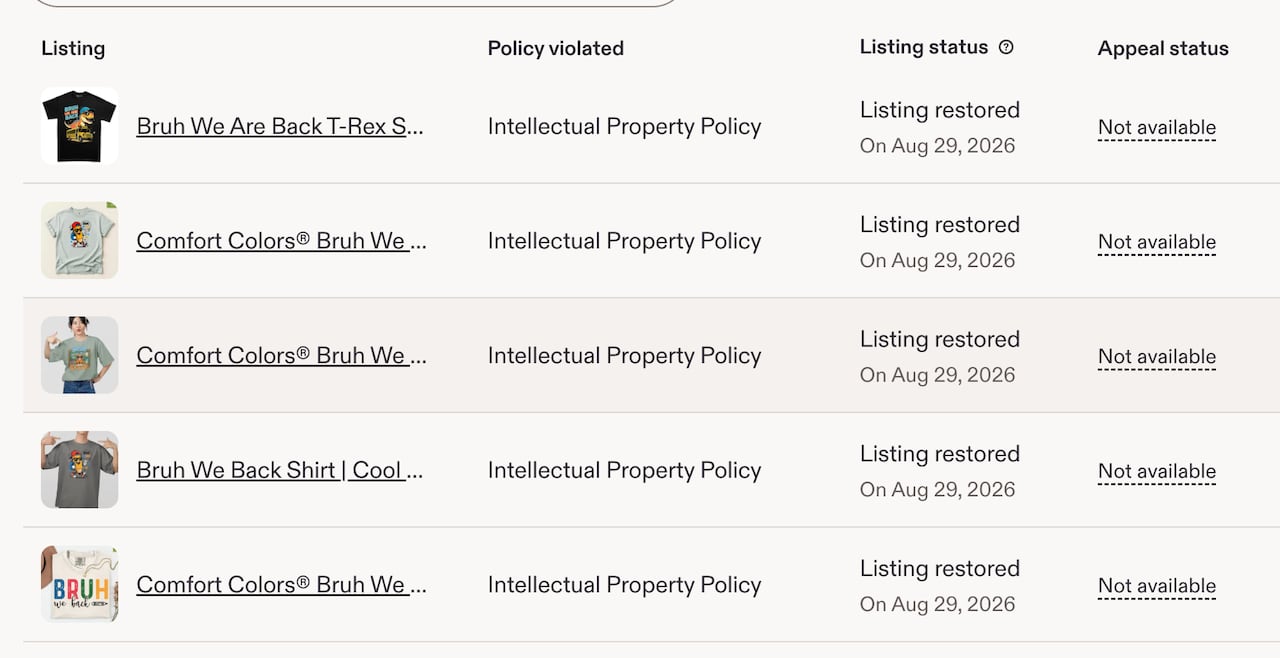
A screenshot of Sam Joseph Karam’s Etsy listings that were reported by the holder of a Canadian trademark for the term ‘bruh.’ (Submitted by Sam Joseph Karam)
Bad faith trademarks can be taken down
According to a relatively recent aspect of Canada’s trademark regulations implemented in 2019, a trademark may be invalidated if it was registered in “bad faith,” as explained by Carys Craig, a professor at York University’s Osgoode Hall Law School who specializes in intellectual property law.
Although there have been cases arguing bad faith, she notes that this portion of the law remains somewhat untested, leaving uncertainty about how a court might rule in this situation.
Craig emphasizes that licensing is a legitimate method of utilizing a trademark. Overall, she suggests that the manner in which the “bruh” trademark is showcased on the website, coupled with the takedown requests being pursued, might suffice to meet the criteria for bad faith.
“We are still uncertain about what that specifically looks like,” she added.
Abbas informed CBC News that he trademarked the term to develop a “licensing-only brand at a time when there was no BRUH-branded product available in Canada,” and he disagrees that “protecting, enforcing, or commercially developing” the brand should be viewed as bad faith.
“If there exists a legitimate dispute regarding the validity, extent, or infringement of the registration, Canadian law offers mechanisms and forums to resolve those concerns,” he stated.
Does a trademark mean you own a word?
Despite widespread usage, general terms and popular culture phrases can indeed be trademarked — the context is key, according to Craig.
The purpose of a trademark is to distinguish one brand’s products or services from another’s, she explains. Therefore, a word like “apple” cannot be trademarked for selling fruit because it merely describes the item, but it is perfectly valid when selling computers.
Several other factors are taken into account during a trademark application, but Craig indicates that since “bruh” does not describe the product in this instance, it could reasonably serve as a trademark.

Osgoode Hall Law School professor Carys Craig, who specializes in intellectual property law and technology, says it’s up to the courts to decide if the way the ‘bruh’ trademark is being utilized could be interpreted as bad faith. (Alexis Raymon/CBC)
However, obtaining a trademark does not equate to owning it outright, and experts assert that the “bruh” apparel on Etsy might not necessarily be infringing solely based on the term’s usage.
Paula Clancy, a partner in intellectual property law at Gowling WLG, states that, in determining potential infringement, courts would assess how the alleged infringer is using the trademark — whether as a source of origin, to create the impression of being from a specific brand, or in an ornamental fashion as part of a design.
Shirts featuring slogans like “Bruh, we back,” which Karam had removed, “could potentially fall within those exceptions,” Clancy noted — suggesting they might not constitute infringement.
Despite this, Karam claims Etsy did not provide him with an avenue to appeal their decision to remove the items.
Abbas, for his part, stated that he reported listings to Etsy when he “reasonably believed” they conflicted with his trademark rights, and he never intended to “restrict individuals from using the word in casual conversation or daily communication.”
An Etsy representative informed CBC News that the platform evaluates and removes products upon receipt of legitimate infringement notifications and emphasized that sellers must comply with all laws and site policies. The spokesperson advised that sellers should contact the individual who filed the original complaint if they believe their listing was incorrectly removed.
Clancy acknowledges the reasoning behind platforms like Etsy taking trademark takedown requests seriously, but she notes that a policy lacking an appeals process poses a significant hurdle for sellers who may be reluctant to incur the costs of litigation.
Testing boundaries of trademark system
Clancy remarks that such cases are infrequent in Canada.
“Typically, we observe the opposite scenario where infringers are using marks without proper authorization,” she explained, highlighting that some individuals attempt to benefit from the established reputation of a recognized brand.
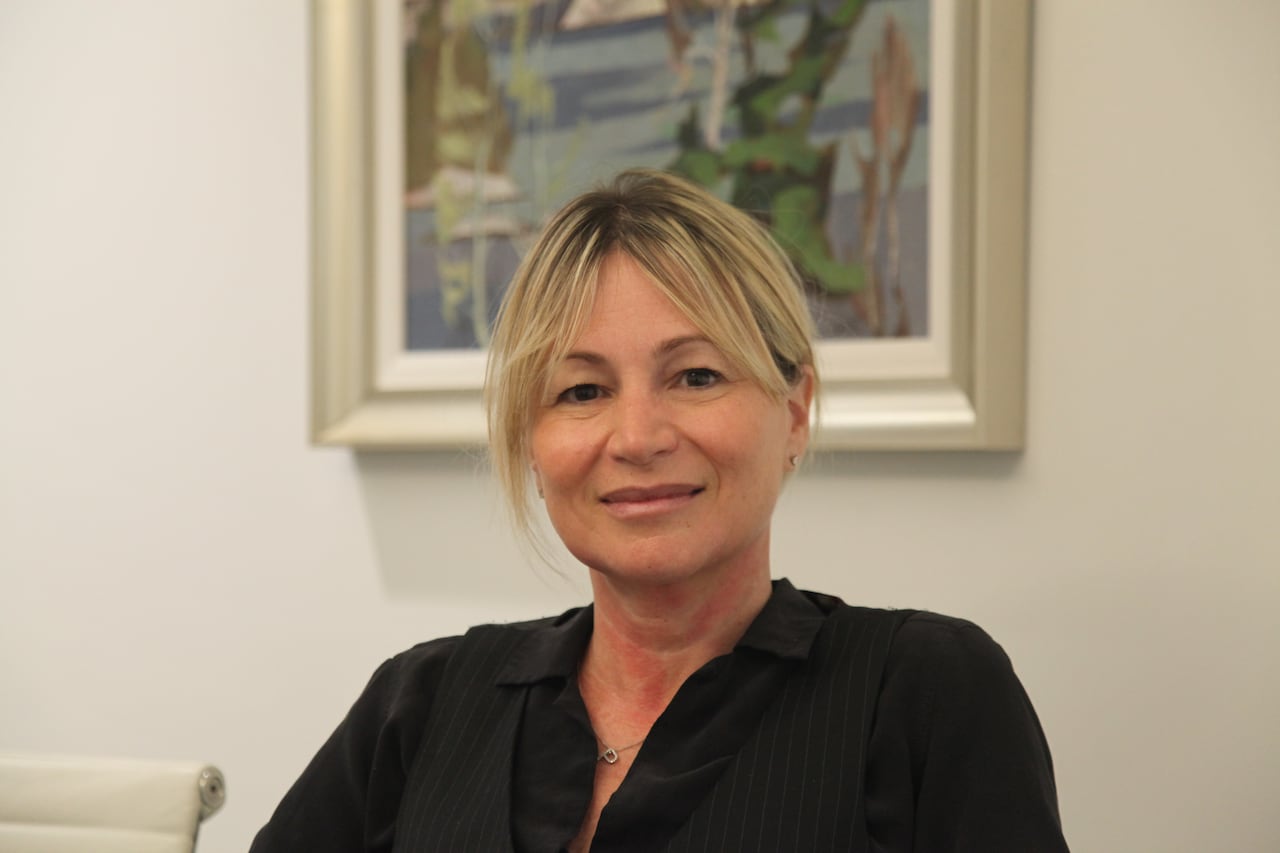
Intellectual property lawyer Paula Clancy acknowledges the challenges sellers face when trying to contest product removals reported for infringement. (Stu Mills/CBC)
However, Craig is concerned that due to the high costs associated with trademark disputes, particularly for small businesses, instances of trademark squatting or excessive enforcement might go unnoticed more frequently than anticipated.
She also highlights that, despite the protests from Etsy sellers, the trademark holder in this situation has navigated a “careful line” that could still remain legally compliant, given that they were granted trademark rights and licensing trademarks is permissible.
“This situation truly tests the limits of the trademark system and exploits some of the policy deficiencies or loopholes that exist within the system,” Craig concluded.
She suggests that stricter regulations might be necessary to avoid such circumstances. Additional care may be required during the initial phases of issuing trademarks, especially for trendy phrases where there could be greater motivation to monopolize them.
Facilitating easier processes for contesting potential bad-faith trademarks and enacting modifications to online marketplaces that allow sellers to appeal trademark removals could also be beneficial, as per Craig.
She labeled it a “worst-case scenario” to find oneself in a situation where everything is protected, nothing is litigated, and “all items are immediately removed as soon as a trademark owner asserts their rights.”